Framework Laptop 13 Pro Review 2026
Framework Laptop 13 Pro launches with machined aluminum, a 2.8K 120Hz display, LPCAMM2 memory and Intel Panther Lake. CodeHelper rounds up early impressions and the open questions: Intel vs ARM in 2026, the slow pace of ARM on stable Linux, the 20 hour battery claim, repairability as a real advantage and the premium price without enterprise grade support.
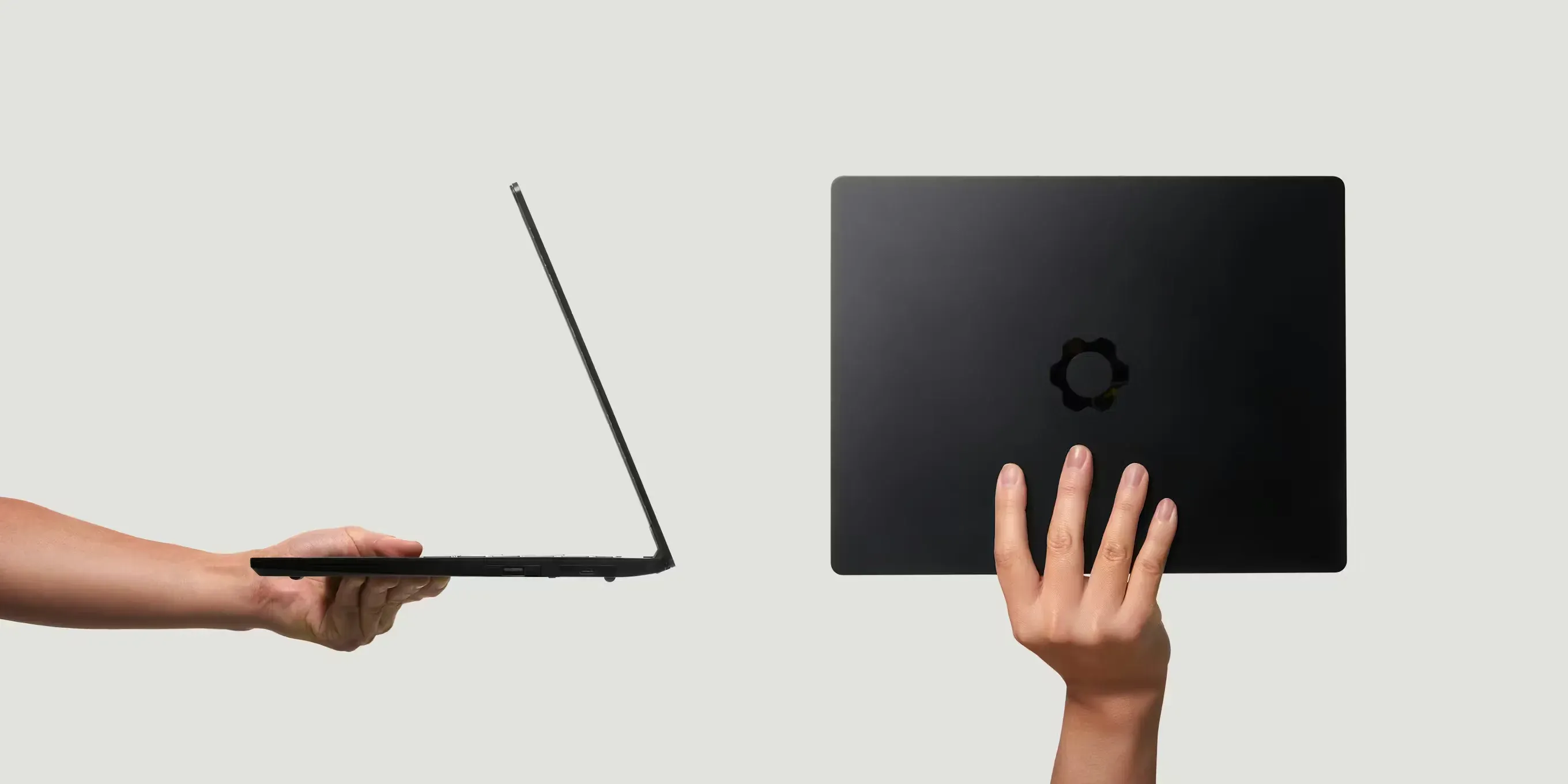
Pros
- + Fully machined 6000 series aluminum chassis, build quality finally premium
- + Custom 13.5 inch 3:2 2.8K IPS display, 30 to 120 Hz, factory calibrated
- + LPCAMM2 user replaceable memory, 16, 32, or 64 GB modules
- + PCIe 5.0 storage up to 8 TB, 100 W GaN charger included
- + Optional Ubuntu preload, the most credible Linux ultrabook of 2026
- + Backwards compatible with existing Laptop 13 chassis for selective upgrades
Cons
- - 20 hour battery claim is a Netflix streaming figure, not a developer workload number
- - No enterprise grade support tier, no on site warranty, no fleet management story
- - sRGB only color gamut, not suitable for color critical creative work
- - Premium pricing starting at 1,499 dollars without the surrounding services Dell or Lenovo offer
- - Hands on testing across the industry still extremely limited at launch
Verdict
The most credible Linux ultrabook launch of 2026 on paper, but the battery claim, the support story, and real world performance still need independent testing before a confident recommendation.
Opinion Roundup: Framework Laptop 13 Pro (2026)
A note before you read
This is not a hands on review. I did not have the laptop on my desk, I did not attend the Next Gen Event 2026 in San Francisco where Framework announced it, and I have not run a single benchmark on the actual hardware. What follows is a structured roundup of early impressions from outlets that did get to touch the machine, combined with my own reflections on what the announcement means for developers, especially Linux users, and what questions are still open.
Framework has a familiar profile in this space. Every previous generation has shipped with the same headline trade off: outstanding repairability and modularity, in exchange for a build quality and battery life that never quite matched the premium ultrabooks they were aiming at. The Laptop 13 Pro is the company's attempt to close that gap. On paper it does, and that is genuinely interesting. On the ground, the picture is more nuanced.
What Framework Actually Announced
The Laptop 13 Pro is the first Framework machine fully machined out of 6000 series aluminum. It is also the first with a haptic trackpad, the first with a custom 13.5 inch 3:2 IPS display at 2880 by 1920 with variable refresh from 30 to 120 Hz and factory color calibration, and the first with PCIe 5.0 storage up to 8 TB. It uses Intel's new Core Ultra Series 3 (Panther Lake) chip, LPCAMM2 compression mounted memory, a 74 Wh battery (22 percent larger than the previous generation), and a 100 W GaN charger. It is the first 13 inch Framework with a touchscreen, and the first with Dolby Atmos certified side firing speakers. The chassis still measures 15.85 mm thick, weighs 1.4 kg, and remains compatible with existing Framework Laptop 13 components: you can buy just the new mainboard, just the new display, just the new keyboard and trackpad, or just the bigger battery and bottom cover, and slot them into a machine you already own.
Pricing starts at 1,499 dollars for a prebuilt with an Intel Core Ultra 5 325, 16 GB of LPCAMM2, and 512 GB of storage, or 1,199 dollars for the DIY kit. Step up to the Core Ultra X7 358H with 32 GB of RAM and 1 TB of storage and the price climbs to 2,099 dollars. Framework CEO Nirav Patel is positioning the machine as, in his own words, the MacBook Pro for Linux users, and you can order it preloaded with Ubuntu instead of Windows. First shipments are expected in June 2026.
First Impressions From People Who Touched It
The Verge spent time with the device on the show floor and described the build quality as night and day compared to previous Framework laptops. Sean Hollister wrote that the machined aluminum chassis and keyboard have very little flex, that the haptic trackpad feels smooth with crisp tactile feedback, and that the hinge is properly tensioned so the lid opens with a single finger, the same trick Apple has been doing on MacBooks for years. In anodized black it apparently looks the part of a premium ultrabook, which is something Framework laptops have rarely been called.
The display drew praise for its matte coating but more measured comments on brightness. At 700 nits and a color gamut capped at 100 percent of sRGB rather than DCI P3 or Adobe RGB, it is competitive but not class leading. Patel has been transparent about the trade off: Framework chose specs that maximize battery life over the wider gamut a visual professional would want. That choice is consistent with the stated audience. This is not a laptop for color graders. It is a laptop for developers.
Reflection One: Can Intel Still Compete With ARM in 2026?
Apple's transition to Apple Silicon redrew the map. Qualcomm's Snapdragon X family is pulling Windows in the same direction, with multi day battery on the right workloads and silent fanless designs. The performance per watt narrative has clearly moved toward ARM. So the question is fair: in 2026, does an Intel platform still make sense in a premium ultrabook?
The honest answer is yes, with caveats. Panther Lake is Intel's most aggressive efficiency play in years, manufactured on the new 18A process and with a redesigned NPU and integrated graphics. Framework is claiming the X9 configuration can edge out the 14 inch M5 MacBook Pro in a 4K Netflix streaming battery test (twenty hours), which we will get to in a moment. For developers who depend on x86 only tooling, on virtualization stacks that still favor x86, on legacy enterprise software, or on a Linux desktop that still has rough edges on ARM, Intel remains the path of least resistance. That is not nothing. It is the reason a sizable chunk of the developer market is still on x86.
Reflection Two: ARM on Linux Is Still Not a Serious Business Story
This is the point that often gets glossed over in reviews of ARM laptops aimed at Linux users. The big, stable, business friendly distributions, Ubuntu LTS, RHEL, Debian stable, openSUSE Leap, are still meaningfully more polished and better tested on x86 than on ARM64. They run on ARM. They run reasonably well in many cases. But the second you step into the kind of mixed environment a working professional actually has, proprietary VPN clients, custom kernel modules, vendor backed driver packages, niche development SDKs, occasional binary blobs from a hardware partner, the friction is still real. You will spend evenings on forums. You will sometimes recompile things. You will sometimes give up.
That is fine for a hobbyist. It is fine for a developer who treats their laptop as a project in itself. It is not fine for someone who wants to open the lid on Monday morning, run their stack, and bill hours. For that audience, an x86 Linux laptop with a vendor that actually tests its drivers against Ubuntu LTS is still the path that makes sense. Framework's decision to ship the 13 Pro with optional preloaded Ubuntu, on Intel, is not a technical accident. It is the only configuration that lets Framework genuinely claim the MacBook Pro for Linux users title without putting an asterisk on it.
Reflection Three: That 20 Hour Battery Claim
Twenty hours of streaming 4K Netflix sounds impressive until you read what the test actually measures. Video playback on a modern laptop is one of the most efficient workloads in existence. Hardware video decoders sip a fraction of a watt. The display backlight and Wi Fi stack do most of the work. A claim built on this benchmark tells you very little about what the laptop will do under the load a developer actually puts on it: a JetBrains IDE running indexing, a few dozen browser tabs with DevTools open, a compiled language toolchain doing incremental builds, a Docker engine keeping a database container warm, an LSP server in the background.
My expectation, not from testing this device but from years of watching laptop battery claims collapse the moment real work begins, is that twenty hours becomes eight to ten hours of actual coding, possibly less with the brighter display modes turned on. That is still respectable. It is comparable to where the best Apple Silicon and Snapdragon laptops land. It just is not the headline number. Treat the twenty hour figure as marketing. Wait for independent reviews running real workloads before believing it shifts the competitive picture.
Reflection Four: Modularity Remains the Real Story
Strip away the new chassis and the new chip and the marketing language, and the most important fact about the Laptop 13 Pro is the one Framework barely talks about anymore because it is now table stakes for them: you can replace almost everything. The mainboard is removable, the screen is replaceable, the keyboard and trackpad lift out, the storage is M.2 2280, the RAM uses LPCAMM2 modules that you can buy on the Framework marketplace in 16 GB, 32 GB, and 64 GB capacities. The new 13 Pro components are backwards compatible with the previous Laptop 13 chassis, which means existing Framework owners can upgrade selectively rather than buying a new machine.
This is the only laptop in the premium tier where, in five years, you will be able to drop in a faster mainboard, a brighter display, and a fresh battery, and keep the rest. Apple, Dell, Lenovo, HP, none of them offer this. In a market where RAM prices have nearly doubled in twelve months and where every other laptop hides its components behind glue and proprietary connectors, the upgrade path Framework offers is not a gimmick. It is the entire reason this product exists. If you weight your purchase decision around five year cost of ownership rather than year one specs, the Framework calculus is genuinely different from anyone else's.
Premium price, premium support?
At 1,499 dollars to start and over 2,000 dollars for a well specced configuration, the Laptop 13 Pro plays in the same price tier as the Dell XPS 13, the Lenovo ThinkPad X1 Carbon, and the MacBook Pro 14. What those machines come with, and what Framework still does not, is the surrounding service layer: enterprise procurement contracts, on site warranty options, accidental damage coverage, four hour business response SLAs, dedicated commercial account managers, fleet imaging, asset tagging. A solo developer or a small studio can ignore all of that. An IT department buying for a hundred engineers cannot. The Pro suffix on a laptop that costs this much puts that gap into sharper focus.
Reflection Five: Who Is This Actually For?
The Framework audience has always been a particular kind of person: technically confident, willing to tinker, ideologically aligned with right to repair, and patient with rough edges in exchange for control. The Laptop 13 Pro is an attempt to widen that audience without losing it. The build quality and the new display are an explicit appeal to people who have been buying MacBook Pros and ThinkPads. The Linux preload and the modular architecture are an appeal to people who would never consider either.
Whether the broader audience actually shows up depends on questions Framework has not answered yet. Will support feel professional when something goes wrong on day forty? Will the Ubuntu image stay current and pass kernel updates without breaking the fingerprint reader for a month? Will the LPCAMM2 supply hold up if memory prices spike again? Will an enterprise procurement team trust a six year old company against Lenovo and HP? Each of those is a real question, and none of them get answered at a launch event.
For now, the safe assessment is this. If you are a developer who values modularity and repairability above all else, who runs Linux as a daily driver, and who has the patience to be an early adopter of a new chassis, the Laptop 13 Pro is the most exciting Linux laptop launch of 2026. If you are a developer who needs a machine to just work, who relies on enterprise support, or who needs the absolute best in performance per watt, the answer is more complicated, and the right move is to wait six months for independent benchmarks, real battery numbers, and the first wave of warranty claims to play out in public.
Sources and Further Reading
First impressions and event coverage from The Verge: Framework announces Laptop 13 Pro, the MacBook Pro for Linux users. Specifications, configurations, and pricing from the Framework Laptop 13 Pro official product page. Quotes from Framework CEO Nirav Patel reported by The Verge from the Framework Next Gen Event 2026 in San Francisco.
Published April 2026. This is an opinion roundup, not a hands on review. The author has not personally tested the Framework Laptop 13 Pro and did not attend the Framework Next Gen Event 2026. CodeHelper has no commercial relationship with Framework Computer Inc.
Frequently Asked Questions
Is the Framework Laptop 13 Pro a good Linux laptop in 2026?
On paper it is the strongest Linux ultrabook launch of 2026. Framework offers an Ubuntu preload, fully replaceable RAM and storage, and a custom 2.8K 120 Hz display. The Intel Panther Lake chip avoids the ARM driver maturity issues that still affect stable Linux distributions like Ubuntu LTS and RHEL. The unknown factor is real world battery life and warranty service, both of which need independent testing.
How realistic is the 20 hour battery life claim?
The 20 hour figure is measured by streaming 4K Netflix, one of the most efficient workloads possible on a modern laptop. Real developer workloads with an IDE, browser, Docker containers, and a language toolchain typically deliver between eight and ten hours on the best ARM and Intel ultrabooks. Treat the headline number as marketing and wait for independent reviews running real coding workloads.
Can Intel still compete with ARM laptops in 2026?
For developers who depend on x86 only tooling, on virtualization stacks that still favor x86, or on a Linux desktop with mature driver support, Intel remains the path of least resistance. Apple Silicon and Snapdragon X have the lead in performance per watt, but the ARM ecosystem on Linux still has rough edges in business friendly distributions. Panther Lake is Intel most aggressive efficiency play in years and remains a credible choice for that audience.
Does Framework offer enterprise support like Dell or Lenovo?
No, not at the same level. Framework does not offer four hour business response SLAs, on site warranty options, dedicated commercial account managers, or fleet imaging services. A solo developer can ignore that gap. An IT department buying for a hundred engineers cannot. This is the most important caveat to the premium pricing of the Laptop 13 Pro.
Should I buy the Framework Laptop 13 Pro now or wait?
If you value modularity and repairability above all else and run Linux as a daily driver, preordering is reasonable. If you need a machine that just works with enterprise support behind it, the safer move is to wait six months for independent benchmarks, real battery numbers, and the first wave of warranty experiences to play out in public.
Related
CodeHelper is free and ad-free. Support the project on Ko-fi if you find it useful.